In 1660, a 32-year-old preacher was arrested near Harlington and brought to Bedford, where he would spend the next twelve years imprisoned for refusing to stop preaching. It was in Bedford County Gaol that John Bunyan began writing The Pilgrim's Progress, a book that would become one of the most widely read works in English literature.
Arrest and Imprisonment in Bedford
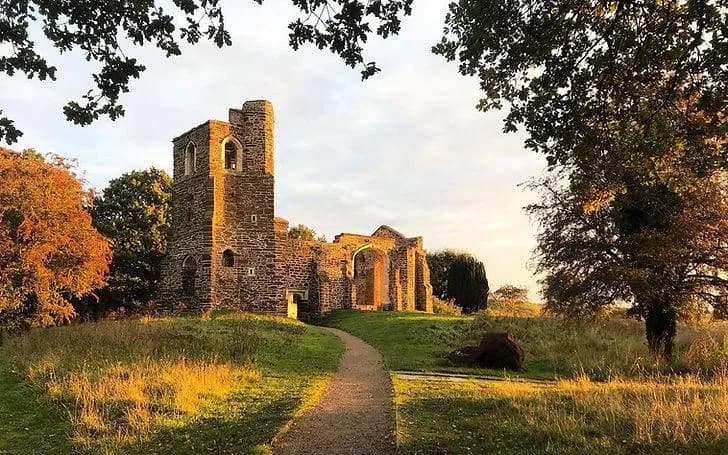
Bunyan was arrested in November 1660 at Lower Samsell, a farm near Harlington, approximately thirteen miles from Bedford. He was interrogated by Sir Francis Wingate at Harlington Manor, a Grade II* listed building that still stands today and is believed to be the only remaining building where Bunyan is known to have stayed.
In January 1661, Bunyan appeared before the Bedford quarter sessions, where he was indicted for "devilishly and perniciously abstaining from coming to church" and holding "unlawful meetings." The court sentenced him to three months imprisonment with the threat of deportation if he did not conform to Anglican worship. When Bunyan refused to give up preaching, his imprisonment was extended to twelve years.
Bunyan was held at Bedford County Gaol, which stood at the corner of High Street and Silver Street. While imprisoned, he was allowed out occasionally to attend the Bedford Meeting and preach. His wife Elizabeth, who was pregnant at the time of his arrest, gave birth prematurely to a stillborn child during his imprisonment. Despite these circumstances, Bunyan was permitted access to a Bible and John Foxe's Book of Martyrs, and he supported his family by making shoelaces in prison.
Writing The Pilgrim's Progress
During his confinement from 1660 to 1672, Bunyan wrote his spiritual autobiography Grace Abounding to the Chief of Sinners, published in 1666. He also began writing The Pilgrim's Progress, which would be published in 1678, six years after his release.
The book drew heavily on Bedfordshire landscapes that Bunyan knew intimately. The wicket gate was inspired by Elstow Abbey, near his birthplace. The Slough of Despond was drawn from Squitch Fen near his cottage. The Delectable Mountains were modelled on the Chiltern Hills. By 1692, just fourteen years after publication, more than 100,000 copies had been printed, and the book had reached readers in France, Holland, New England, and Wales.
Local Legacy: Sites to Visit
Visitors to Bedford today can walk in Bunyan's footsteps through several significant landmarks.
The Statue
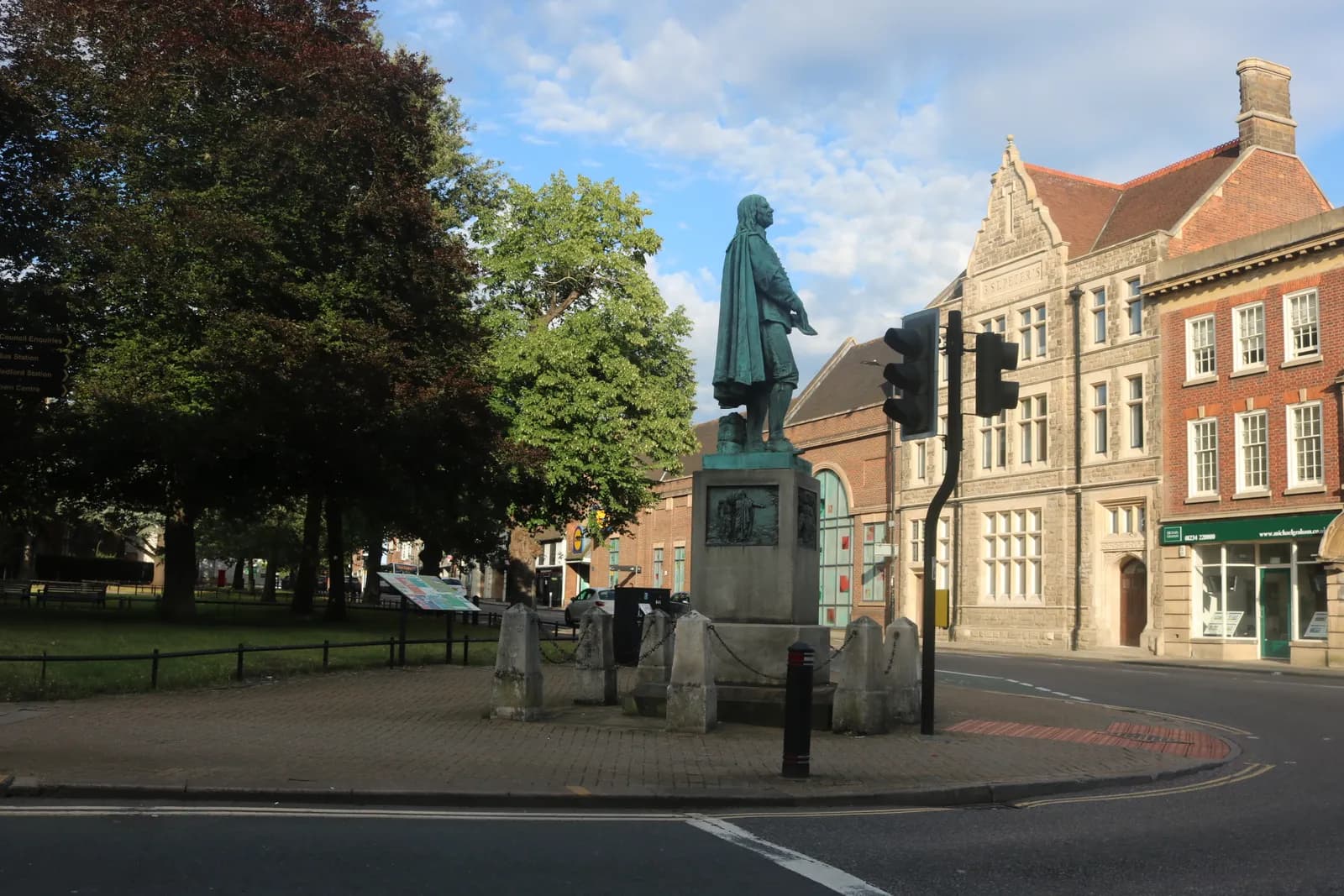
Standing on St Peter's Green at the south-western corner facing High Street is a bronze statue of John Bunyan unveiled on 10 June 1874. Commissioned by Francis Russell, the 9th Duke of Bedford, and sculpted by Sir Joseph Edgar Boehm, the 2.5-ton figure depicts Bunyan preaching from an open Bible with a broken fetter at his left foot. The Aberdeen granite plinth features three bronze relief scenes from The Pilgrim's Progress: Christian at the wicket gate, his fight with Apollyon, and losing his burden at the foot of the cross. The unveiling ceremony drew 10,000 people, including Lady Augusta Stanley, wife of the Dean of Westminster.
Bunyan Meeting Free Church and Museum
Located on Mill Street, the Bunyan Meeting Free Church traces its origins to 1672, when the congregation purchased a barn for worship. The current church building dates from 1849. In 1876, the Duke of Bedford donated bronze doors by Frederick Thrupp featuring ten bas-relief panels depicting scenes from The Pilgrim's Progress, modelled after Ghiberti's Gates of Paradise in Florence.
Adjacent to the church, the John Bunyan Museum opened in 1998 and holds Accredited Museum status. It houses Bunyan's iron violin and wooden flute, a stoneware jug used during his imprisonment, his will, and a third edition of The Pilgrim's Progress. The museum recreates scenes from Bunyan's life and seventeenth-century Bedford social history. Opening hours are Tuesday through Saturday, 11am to 4pm, from February through November.
Elstow and Surroundings
Bunyan was born in 1628 at Bunyan's End, located between Harrowden and Elstow High Street, approximately two miles south of Bedford town centre. The Moot Hall in Elstow, built between 1440 and 1450, was used by the Bunyan Meeting congregation from 1810 to 1910 and now serves as a museum of seventeenth-century life with Bunyan exhibits. The hall houses a painting titled "John Bunyan in Prison" by Andrew Geddes.
The John Bunyan Trail
For those interested in exploring further, the John Bunyan Trail is an 81-mile walking route that passes through locations in Bedfordshire associated with Bunyan's life and work.
A Bedfordshire Day
Bunyan's birthday, 30 November 1628, was selected as Bedfordshire Day in a public vote held in March 2015. The date commemorates the county's most famous literary son, whose work emerged from the hardship of imprisonment in Bedford and went on to influence generations of writers including C.S. Lewis, Charles Dickens, Charlotte Brontë, and Mark Twain.
The Bunyan Meeting Free Church continues to hold regular services, maintaining an unbroken line of nonconformist worship in Bedford for more than 350 years.